Linked data as a relationship engine for library research
What might we discover if we could explore a library collection not as a list of records, but as a network of relationships?
Linked data is often discussed as infrastructure: identifiers, vocabularies, triples and endpoints working behind the scenes. These components are essential, but the technical language can make linked data feel remote from the everyday work of librarians and researchers. My presentation for the ALIA LARK Symposium asks what happens when we bring those relationships to the surface and use them as a practical method of inquiry.
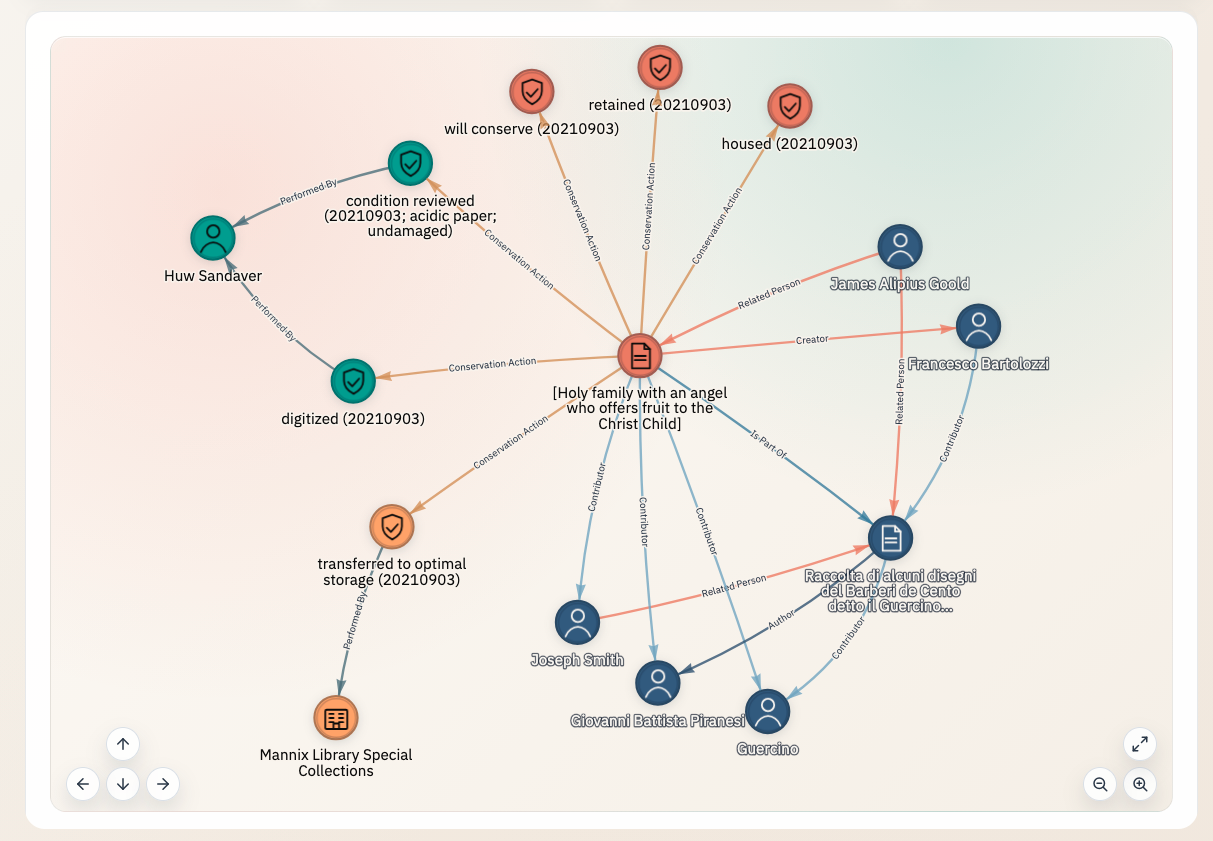
The talk will draw on the development of An Entity Explorer, a working Python application I created to explore, analyse and curate library linked data. It brings together bibliographic and cultural heritage data from sources such as MARC21, RIS, JSON-LD and RDF, then provides tools for visualising networks, tracing paths between entities, detecting communities and annotating findings.
In practical terms, this means that a catalogue record, authority heading, IIIF object, conservation note or OCLC entity can become part of an explorable evidence environment. Instead of retrieving isolated records, we can ask relational questions. Which people, works, places and institutions cluster around a collection? Where do unexpected connections appear? Which relationships are missing, weak or unusually strong? What provenance, subject or conservation histories become visible once the data is modelled as a graph?
I will demonstrate examples from special collections and cultural heritage contexts, while reflecting honestly on what I learned from building the application and testing it with real-world data. The session is not intended as a showcase of technology for its own sake, nor does it assume that librarians need to become full-time semantic web engineers.
My broader argument is that linked data can be more than future-facing infrastructure for machines. Used critically and creatively, it can become a visible research interface—a relationship engine that helps library professionals generate questions, test interpretations and make the knowledge embedded in our collections more legible.